Spotify loudness, measured in your browser
Spotify LUFS: Measure Your Song Against -14 LUFS, Free
AI-Mastering.org turns your song into a Spotify LUFS reading in your browser, free: integrated loudness and true peak against Spotify's official -14 LUFS and -1 dBTP (-2 dBTP for louder masters), and how far Spotify turns it down. Switch to Apple Music, YouTube or 5 more. Up to 40 files, nothing uploaded.
- Free, no sign-up
- Spotify -14 LUFS, -1 dBTP
- 8 platform targets
- Never uploaded
Drop your tracks here
One song or a whole album. Get integrated LUFS, true peak and loudness range in seconds.
- WAV
- MP3
- FLAC
- M4A
- AAC
- OGG
- OPUS
- AIFF
Up to 200 MB and 15 minutes per file
Measured in your browser. The audio is never uploaded.
Or try a sample
Each loads a mix and its master, so you can compare the two.
AI-generated songs. The mixes were turned down to leave room for mastering; the masters are our free master.
- Integrated LUFS
- Short-term and momentary
- Loudness range (LRA)
- True peak, 4x oversampled
Spotify at a glance
Official- Loudness reference
- −14 LUFS
- Peak ceiling
- −1 dBTP
- If louder than −14 LUFS
- −2 dBTP
Spotify turns louder songs down to its reference with normalization on, and may turn quieter ones up.
Source: support.spotify.com
- the official Spotify LUFS target
- −14LUFS
- peak ceiling, -2 dBTP if louder than -14
- −1dBTP
- Spotify, Apple Music, YouTube and 5 more
- 8targets
- side by side, with an On Spotify column
- 40files
- no sign-up, nothing to install
- Free
- of your audio uploaded
- 0bytes
Your Song Against the Spotify LUFS Target
One pass over the whole file, then a plain answer: where it sits against Spotify, what happens on playback, and what to do next.
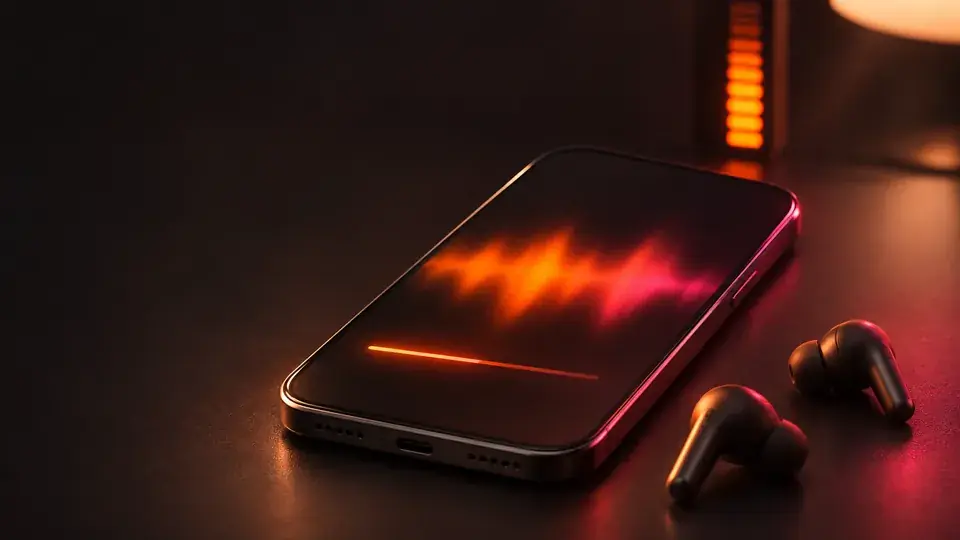
Integrated loudness (ITU-R BS.1770-4) set against the Spotify LUFS target of -14. Louder songs get one line, such as Spotify turns it down 3.4 dB, and a scale from -30 to -4 LUFS marks the reference and yours. Quieter songs read Quieter than Spotify's reference.
True peak is found 4x oversampled. Spotify asks for peaks under -1 dBTP, and under -2 dBTP once a master is louder than -14 LUFS, because lossy encoding can push peaks up. The ceiling shown follows your song's loudness.
Pills switch the comparison in place: Apple Music, YouTube, Amazon Music, TIDAL, Deezer, SoundCloud and our Loud target. Each carries its source: Official for Spotify only, commonly measured, relayed by staff, or our pick.
Flip Hear it as Spotify plays it and a loud song plays turned down by the amount above, a simple preview of loudness normalization. Quieter songs play as they are: the preview never plays louder than your file.
Drop up to 40 files: each row shows integrated loudness, max short-term, true peak, the gap to Spotify and what happens On Spotify. Sort any column, then keep it all with Copy summary or Download CSV.
How it works
Measure Spotify LUFS in Three Steps
A Spotify LUFS reading runs on your device: the file is decoded and measured in this tab. In our test a 10-minute WAV took 1.4 seconds.
Drop your song
Drop it on Drop your tracks here or press Choose files. No song handy? Each sample under Or try a sample loads a mix and our master of it.
Read your Spotify LUFS
Under On Spotify: how far it gets turned down, its integrated loudness and true peak, and the ceiling that applies. Pick a pill to switch to another LUFS target.
Fix it or ship it
Too quiet or peaks too high? Master to Spotify opens the free mastering tool. Close to the reference? Its loudness needs nothing more.

On Spotify, extra loudness buys nothing. Check your number first.
- the level Spotify for Artists publishes, measured to ITU 1770
- −14LUFS
- how far Spotify turns our +9 dB loud version down
- 3.4dB
- the peak ceiling Spotify advises once a master is louder than -14 LUFS
- −2dBTP
Measured
Mastering for Spotify: Three Files, Three Verdicts
One of our sample songs, a dance pop track, in three versions: the quiet mix, its free Spotify master, and the mix pushed 9 dB louder. Real Spotify LUFS readings.
Integrated loudnessStarlight Signal, loud version, mix +9 dB
−10.6LUFS
Turned down 3.4 dB Spotify plays it at -14 LUFS, so the extra loudness buys nothing.
- True peak
- −1.0dBTP
- Peak ceiling
- −2.0dBTP
- Max short-term
- −9.5LUFS
- Spotify change
- −3.4dB
The mix reads -19.4 LUFS: quieter than Spotify's reference, so nothing is turned down.
How we measured
The master lands on -14.0 LUFS with peaks at -2.6 dBTP: right at the reference. The loud version reads -10.6 LUFS, so Spotify turns it down 3.4 dB, and its -1.0 dBTP peaks sit above the -2 dBTP Spotify advises for masters that loud.
Guide
LUFS for Streaming: Spotify, Other Platforms, Distributors
Spotify for Artists states it plainly: tracks are adjusted to -14 LUFS integrated, measured to ITU 1770, and masters should keep true peaks under -1 dBTP, or under -2 dBTP when louder than -14 LUFS. With normalization on, louder songs are turned down and quieter ones may be turned up. Listeners can also pick Loud or Quiet, or switch it off.
Only Spotify publishes its number. For the rest, a short loudness chart of LUFS for streaming, with how each figure is known:
- 1Apple Music: about -16 LUFS, commonly measured; Apple asks for at least 1 dB of headroom. More on Apple Music LUFS.
- 2YouTube: about -14 LUFS, commonly measured; loud uploads are turned down. More on YouTube LUFS.
- 3Amazon Music and TIDAL: about -14 LUFS, commonly measured.
- 4Deezer: -15 LUFS, relayed by Deezer staff.
- 5SoundCloud: normalizes but states no target; we recommend -11 LUFS with -2 dBTP.
Usually one. A -14 LUFS, -1 dBTP master sits at Spotify's reference, close to YouTube, Amazon Music and TIDAL, and about 2 dB above Apple Music, so turn-downs stay small. Mastering louder is a choice of sound, not a rule; keep peaks under -2 dBTP if you do.
Want every platform's turn-down in one table? Use loudness penalty. For the full meter with loudness range and clipping, use the LUFS meter.
DistroKid takes WAV, MP3, M4A, FLAC, AIFF or WMA, and calls a 16-bit, 44.1 kHz WAV typical. Its help center says it does no loudness processing unless you opt into its Loudness Normalization extra, which sets -14 LUFS and -1 dBTP, and that a release already at that level is left alone. Other distributors publish their own rules: read their help pages.
Quiet mix? AI mastering brings it to -14 LUFS and -1 dBTP before you upload. A mastered song that only needs to go up a little can use make song louder.
FAQ
Spotify LUFS FAQ
Targets, true peak, other platforms and distributors, answered first.
-14 LUFS integrated, measured to ITU 1770, per Spotify for Artists. With normalization on, songs louder than that are turned down to it. Spotify also asks for true peaks under -1 dBTP, or under -2 dBTP for masters louder than -14 LUFS.
For streaming, -14 LUFS with peaks under -1 dBTP is a safe target LUFS for mastering: it is Spotify's official reference and near the levels commonly measured on YouTube, Amazon Music and TIDAL. Louder is fine if your genre wants it; then keep peaks under -2 dBTP.
Around -14 LUFS, or louder if that is the sound you want: Spotify turns louder songs down, so extra loudness buys nothing there. A much quieter song may be turned up, but how far is not shown here, and the preview never plays it louder.
No. -14 LUFS is the level Spotify plays songs at, not an upload requirement: Spotify adjusts the playback level instead. The Spotify LUFS target only tells you how much normalization will change it.
Usually not. One -14 LUFS, -1 dBTP master plays well on most services. Mastering for Spotify gets you close to YouTube, Amazon Music and TIDAL too, and Apple Music turns it down only about 2 dB.
About the same as the Spotify LUFS target: YouTube publishes no number, but -14 LUFS is commonly measured there; YouTube LUFS checks a song or video against it.
A little: about -16 LUFS is commonly measured there, 2 LU under the Spotify LUFS target, though Apple publishes no figure; Apple Music LUFS checks your song against it and explains Sound Check.
It measures louder than -14 LUFS. With loudness normalization on, Spotify lowers louder tracks so songs play at similar loudness. The amount shown here is your integrated loudness minus -14.
No. -14 LUFS is Spotify's playback reference. EBU R128 (-23 LUFS, the broadcast standard for European TV and radio) is 9 LU quieter, and it is not a streaming target.
It is not required, but mastering for DistroKid is the same as for Spotify: DistroKid delivers your audio as is unless you opt into its Loudness Normalization extra (-14 LUFS, -1 dBTP). Upload a mastered WAV and check it here first.
It uses the same measurement, framed around one platform. For short-term and momentary loudness, loudness range and clipping in depth, open the LUFS meter; to compare Spotify LUFS with every service at once, try loudness penalty.
No. Decoding and measuring happen in your browser tab; neither the audio nor the numbers leave your device. No account is needed.
WAV, MP3, FLAC, M4A, AAC, OGG, OPUS and AIFF, plus the audio of MP4, MOV and WebM: 2 seconds to 15 minutes and up to 200 MB each (8 minutes on a phone), up to 40 files at once.
Start now
Measure Your Spotify LUFS, Free
Drop a song and see your Spotify LUFS against -14 LUFS and -1 dBTP in seconds, with Apple Music, YouTube and five more a click away. Free, no account, and your audio stays on your device.
Drop your audio here
or choose a file. It opens in the tool above and stays on your device.
More Loudness Tools
Master to a LUFS target, push it louder, or compare every platform.